Digital Transformation: How to evolve your business without losing focus
Technology, processes, and culture to adapt to a constantly changing environment
In a world that evolves faster than many companies can adapt, discussing digital transformation is no longer an option, but a strategic necessity.
However, transformation digitally isn’t just about adopting new technologies. It involves rethinking processes, internal structures, and the way an organization creates value for its customers.
Many companies start digital initiatives by implementing tools or software without a clear vision. The result is often more complexity, duplicated processes, or technological investments that fail to generate real impact.
Effective digital transformation goes much further: it means redesigning how a company operates, makes decisions, and uses data to improve its performance.
In this article, we’ll explore what digital transformation really means, why many companies fail in their attempts, and how technology and observability can help manage change effectively.
What is digital transformation, really?
Beyond being a trendy term, digital transformation is the process through which a company redefines its way of operating, using technology as a lever to improve efficiency, adaptability, and growth capacity.
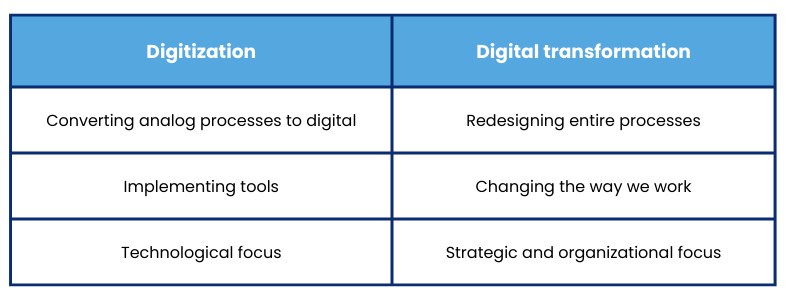
It’s not simply about digitizing existing tasks or implementing new tools.
It involves changes at various levels of the organization. The areas affected include:
- Internal processes.
- Organizational structures.
- Corporate culture.
- Customer relationships.
- Strategic use of data.
In other words, it means changing how decisions are made, performance is measured, and business growth is planned.
Phases and pillars of a digital transformation process
Effective digital transformation doesn’t happen spontaneously. It requires planning, analysis, and gradual implementation.
Typically, the process unfolds in several phases:
- Initial diagnosis. Assessing the current state of the business, its processes, technology, and level of digital maturity.
- Definition of strategic objectives. Establishing what needs improvement or transformation: operational efficiency, customer experience, scalability, or innovation.
- Identifying tools and processes. Selecting technologies that genuinely add value and integrate with the existing infrastructure.
- Team training and adaptation. Transformation doesn’t work if people don’t understand the change or know how to use the new tools.
- Gradual implementation. Deploying technological solutions progressively to avoid interruptions or unnecessary resistance.
- Measurement and continuous improvement. Evaluating results, adjusting processes, and optimizing the digital strategy.
How to identify technological priorities
One of the most common mistakes in digital transformation processes is adopting technology without a clear need.
Before implementing tools like ERPs, CRMs, cloud platforms, or automation systems, companies should ask themselves some key questions:
- What areas of the business need to be more efficient?
- Where are operational bottlenecks occurring?
- What technological systems currently exist within the company?
- Which tools can integrate with the current infrastructure?
Answering these questions makes it possible to prioritize technology investments and avoid projects that don’t generate real value.
How to manage resistance to change
One of the biggest obstacles in any digital transformation process isn’t technology, but people.
Teams often show resistance when changes aren’t explained well or when they are perceived as an imposition.
To reduce this friction, it’s important to maintain clear communication from leadership, offer practical training, involve teams in process improvement, and celebrate progress and small wins.
Digital transformation isn’t about imposing tools, but about creating a culture that understands the value of change.
Technology and Observability in digital transformation
As companies evolve towards cloud, multi-cloud, and distributed architecture environments, understanding what’s really happening inside systems becomes increasingly complex.
That’s why technological observability has become a key element for digital transformation.
Observability makes it possible to analyze metrics, logs, and traces to understand the real state of an infrastructure, detect anomalies, and anticipate problems before they affect operations.
In this context, observability platforms powered by artificial intelligence allow large volumes of data to be transformed into operational decisions.
How Lessthan3 helps
At Lessthan3, we help companies improve their technology operations, infrastructure performance, and scalability through our predictive observability platform powered by artificial intelligence.
This technology enables companies to:
- Analyze metrics, logs, and traces in real time.
- Detect anomalies before they become incidents.
- Identify the root cause of technical problems.
- Optimize cloud costs and infrastructure resources.
- Improve system stability and user experience.
Instead of reacting when a problem occurs, organizations can anticipate incidents and make decisions based on real data.
In this way, technology becomes a strategic tool for improving operations, efficiency, and growth.
Conclusion
Digital transformation isn’t about adopting tools in isolation or digitizing existing processes.
It involves rethinking the way a company operates, uses data, and manages its technology infrastructure.
With a clear strategy, committed leadership, and the right technology, companies—large or small—can improve their efficiency, adapt to a changing environment, and build more scalable systems.
The key lies in making data-driven decisions and truly understanding how the systems that support the business work.
When technology is used wisely, infrastructure ceases to be an obstacle and becomes a competitive advantage for business growth.